Two simple ferments that turn lemons into a year-round staple
Lemons have a talent for disappearing into the background right up until the exact moment you need them. Then you find them—soft, wrinkled, and quietly accusing you of having “big plans” and “no follow-through.” The solution isn’t buying fewer lemons. It’s giving them a longer, better life.
Here are two easy ways to store lemons that don’t involve freezer burn, complicated canning, or pretending you’ll squeeze fresh juice every day. One method makes a spoonable, ready-to-use syrup. The other turns lemons into a serious culinary seasoning that can last for years. Same fruit, two completely different superpowers.
The “everyday jar”: Lemons and ginger in honey
This is the lemon method for real life—busy mornings, cold season, and the simple desire to have something comforting within arm’s reach.
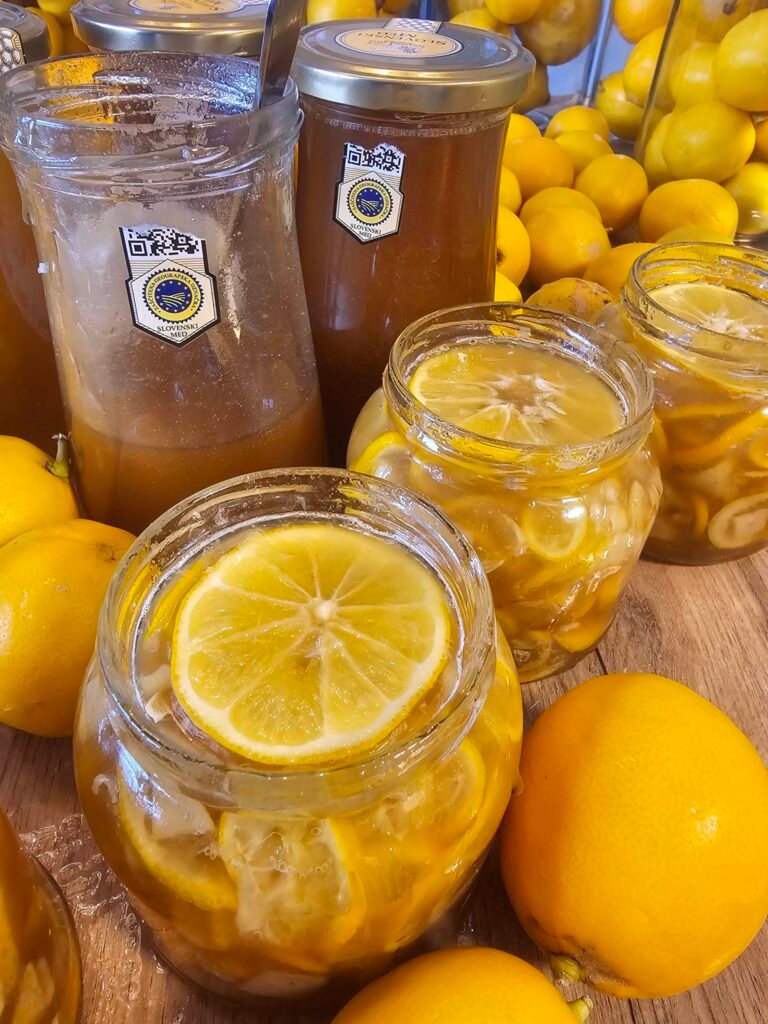
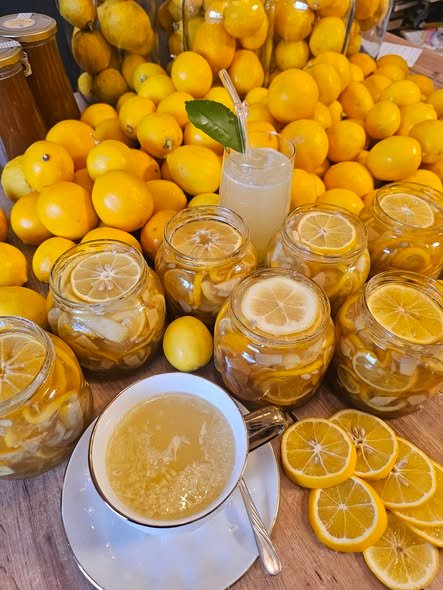
When you slice lemons and ginger and cover them in honey, the honey gradually loosens into a syrup as it draws out the lemon juice. Tiny bubbles can appear. The flavors mellow and merge. What you end up with isn’t just “lemon in honey,” but a smooth, balanced preserve that’s ready whenever you are.
Why it’s genuinely useful:
- Cold-season comfort: warm water or tea with a spoonful feels like a small act of care.
- Throat-friendly: honey coats, lemon refreshes, ginger warms—simple and soothing.
- Gentler than fresh lemon for many people: the sharp edges soften over time.
- Instant lemonade: stir into cold water; add a pinch of flaky sea salt if you like the sweet-salty twist.
- Practical storage: lemons stop going bad and start being available.
Recipe: Naturally fermented lemons in honey
You need: lemons, fresh ginger, honey, clean jars.
Wash lemons well, slice thinly (remove visible seeds). Peel and slice ginger.
Mix lemons and ginger in a bowl and let them sit for about one hour so the lemons release juice and flavors start mingling. Pack into clean jars in layers (lemon + ginger, then honey) until full. Stir well so honey coats everything.
Close the jar and store it in a cool, dark place. Over the next days the honey will become syrupy, and a few bubbles can appear—often a sign of mild, natural fermentation.
How you’ll actually use it: in tea (add when warm, not boiling), warm water, cold water, sparkling water, or straight by the spoon.
The “chef’s secret jar”: Salt-fermented lemons
If the honey jar is a daily helper, salt-fermented lemons are a quiet flex. They’re not a replacement for fresh lemon. They’re a different ingredient entirely—more like a mature seasoning that gets better with time.
Open a well-aged jar and you’ll notice it immediately: the aroma is intensely citrusy, almost floral. The acidity is softer, rounder. The peel becomes tender and edible, and the flesh breaks down into something perfect for sauces and bases. It’s not “lemonade lemon” anymore. It’s “this dish tastes expensive” lemon.
What makes the flavor special:
- Rounded acidity without the sharp bite
- Mild, integrated saltiness (supportive, not loud)
- Intense peel aroma—citrus, sometimes almost perfumed
- A subtle umami depth that makes dishes feel finished
- Soft texture—peel is the star, flesh is great in sauces
How to use fermented lemon (without overdoing it)
Use it in savory dishes, added at the end, finely chopped—especially the peel.
It shines in:
- stews, legumes, vegetable soups
- risotto, couscous, grain bowls
- yogurt dressings, spreads, hummus
- roasted vegetables
- fish and seafood (as a finishing touch in butter or olive oil)
- savory doughs like focaccia or crackers
How much? Start small. Often ½ to 1 teaspoon of finely chopped peel is enough for an entire dish.
Recipe: Fermented lemons in 2% brine (the easy way)
You need: 4–6 lemons, 1 liter water, 20 g salt. Optional: bay leaf, peppercorns, chili (or nothing).
Cut lemons into quarters or sixths. Make brine by dissolving 20 g salt in 1 liter water. Pack lemons into a sterilized jar. Pour brine over them until they’re fully submerged—use a small weight/mesh if needed. Close the jar.
That’s it. No cooking, no preservatives, no drama. Nature does the rest.
Which one should you make?
If you want something you’ll use every day in drinks and tea, go for lemons in honey. If you want a long-lasting culinary ingredient that upgrades savory food with a tiny amount, go for salt-fermented lemons.
And if you want to stop throwing away sad, forgotten lemons entirely—make both. One jar for comfort, one jar for flavor. Your future self will be grateful. Your fruit bowl will be less judgmental.